
What is the Difference Between IQ, OQ, and PQ in Equipment Qualification?
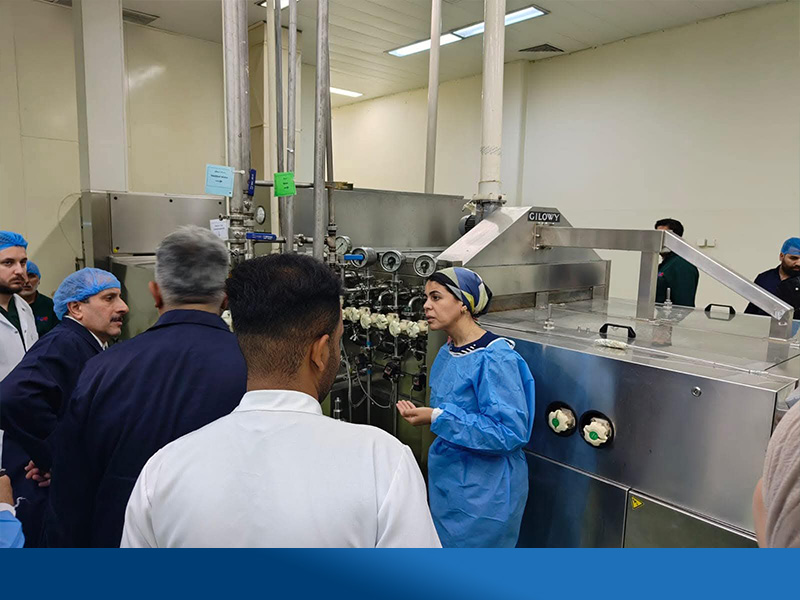
In the pharmaceutical, biotechnology, and medical device manufacturing industries, equipment performance and reliability are directly tied to product safety. System failures or uncalibrated machinery can lead to compromised batches, regulatory compliance fines, and patient risk. To prevent this, regulatory bodies like the Egyptian Drug Authority (EDA), WHO, EMA, and the FDA enforce a structured framework called Equipment Qualification, which is divided into three key phases: IQ, OQ, and PQ.
What is Equipment Qualification?
Equipment qualification is a documented process proving that a specific piece of utility or machinery is designed, installed, operates, and performs consistently according to its intended use and regulatory guidelines. It is a critical component of the overall site Validation Master Plan (VMP).
1. Installation Qualification (IQ)
Installation Qualification (IQ) is the first step in physical equipment validation. Its goal is to verify that the equipment is received, installed, and configured exactly as specified by the manufacturer and the plant's design requirements.
Key checks in an IQ protocol include:
- Verification of equipment delivery against the purchase order and User Requirement Specifications (URS).
- Inspection of physical condition and materials of construction (e.g., 316L stainless steel verification).
- Checking utilities connections (electricity, clean steam, compressed air, purified water).
- Documentation collection: user manuals, piping and instrumentation diagrams (P&IDs), design drawings, and component lists.
- Verification of instrument calibration status (critical sensors, gauges, transmitters).
2. Operational Qualification (OQ)
Once the IQ is complete and approved, the validation team moves to Operational Qualification (OQ). OQ focuses on verifying that the equipment functions properly and operates as intended across its entire specified operating range, including "worst-case" scenarios.
Key checks in an OQ protocol include:
- Testing equipment controls, displays, and safety interlocks.
- Verifying alarms, alerts, and emergency stop features.
- Testing standard operating sequences, speed controls, and mechanical actions.
- Temperature, pressure, or flow rate profiling across high and low limits.
- Testing software permissions, electronic signatures, and audit trails (conforming to FDA 21 CFR Part 11).
3. Performance Qualification (PQ)
The final phase is Performance Qualification (PQ). Unlike OQ (which tests the machine empty or with simulation materials), PQ tests the equipment under actual production conditions using real product materials or highly representative placebos.
The goal of PQ is to demonstrate that the system performs consistently, repeatably, and reliably over time to produce a product that meets all quality standards.
Key aspects of a PQ protocol include:
- Running multiple consecutive production batches (typically a minimum of three) under standard operating parameters.
- Sampling and testing critical quality attributes (CQAs) of the processed product.
- Demonstrating system stability and consistency over extended runs.
- Verifying that challenging variables (like operator changes or raw material batches) do not impact output quality.
Practical Example: Autoclave Validation
To see how these concepts work in practice, let us examine the qualification of a steam sterilizer (autoclave) in a sterile pharmaceutical manufacturing facility:
| Phase | Action Steps for Autoclave Validation | What We Verify |
|---|---|---|
| IQ | Check physical specifications, chamber volume, piping connections, and calibration certificate of the RTD temperature sensors. | Is the autoclave installed correctly with proper clean steam and drain lines? |
| OQ | Run empty-chamber cycles, test door lock alarms, and verify that the autoclave reaches and holds 121°C for the set operational duration. | Does the autoclave chamber operate and control cycle steps properly without raw materials? |
| PQ | Load the autoclave with maximum and minimum product configurations (vials, ampoules), distribute biological indicators (Geobacillus stearothermophilus) and thermal probes. Run 3 cycles. | Does the autoclave achieve a reliable Sterility Assurance Level (SAL) of 10-6 for actual production loads? |
Summary of Differences
Think of it this way: IQ ensures you have the right machine installed correctly. OQ proves that the machine works correctly when you turn it on and push its limits. PQ proves that when you feed it real ingredients, it repeatedly makes the exact pharmaceutical product you need.
If you are looking to qualify your facility's production machinery, HVAC, or purified water systems, contact the experts at QEEMA Egypt. Our validation engineers provide compliant, risk-based IQ/OQ/PQ protocols tailored to your technical requirements.
Frequently Asked Questions
What is the difference between calibration and qualification?
Calibration compares an instrument's measurement against a known standard (e.g., verifying a temperature sensor reads 100°C correctly). Qualification is much broader; it is a documented verification that the entire equipment system (machinery, software, utilities, operators) works together as intended.
Who drafts and executes IQ/OQ/PQ protocols?
Typically, a validation engineer or specialist drafts the protocols. Execution is performed by the validation team, often in coordination with production operators and maintenance personnel. The Quality Assurance (QA) department must review and sign off on all completed reports.